






The 3.6% Social Security COLA increase for 2027 means higher monthly payments for millions of Americans. But with inflation putting pressure on seniors, could retiring abroad make your benefits stretch further?
The Social Security COLA 2027 announcement has brought welcome news to millions of Americans: retirement benefits will increase by 3.6% beginning in January 2027.
But for seniors struggling with rising housing costs, groceries, utilities, and medical expenses, one question remains: Will the increase be enough?
According to the Social Security Administration (SSA), the average retired worker’s monthly benefit will increase by approximately $75, bringing the average payment to around $2,170 in 2027.
That’s an additional $900 annually for the average beneficiary. However, the impact of Social Security inflation on seniors continues to raise concerns about how far retirement income will stretch.
For retirees willing to consider alternatives, there’s another possibility: living somewhere the U.S. dollar buys significantly more.
From Southeast Asia to Latin America and parts of Europe, several destinations offer housing, groceries, transportation, and everyday services at prices well below those in many American cities.
VANAFLY explores 10 affordable places to retire on Social Security in 2027, along with how to research destinations using our Travel Money Index.
Social Security COLA 2027: What Is the New Increase?
The Social Security Administration officially announced the 2027 cost-of-living adjustment on October 14, 2026.
The 2027 Social Security COLA is 3.6%, compared with 2.8% in 2026.
The increase applies to nearly 72 million Social Security beneficiaries, while approximately 7.3 million Supplemental Security Income (SSI) recipients will also receive increased payments. Some people receive both programs.
The adjustment is based on changes in the Consumer Price Index for Urban Wage Earners and Clerical Workers (CPI-W).
Social Security benefits will increase beginning in January 2027, while increased SSI payments will begin on December 31, 2026.
For retirees, the new Social Security payment amounts will depend on their existing benefits.
How Much Will Social Security Payments Increase in 2027?
| Current Monthly Benefit | Estimated 2027 Payment | Monthly Increase |
|---|---|---|
| $1,000 | $1,036 | $36 |
| $1,200 | $1,243.20 | $43.20 |
| $1,500 | $1,554 | $54 |
| $1,800 | $1,864.80 | $64.80 |
| $2,000 | $2,072 | $72 |
| $2,500 | $2,590 | $90 |
These are illustrative calculations based on a 3.6% increase. Actual individual payments can differ due to rounding, Medicare deductions, and other adjustments.
The SSA projects that the average retired worker’s monthly benefit will rise from approximately $2,095 to $2,170.
Beneficiaries can find their personalized COLA notices through their my Social Security accounts when the notices become available, or receive them by mail.
For official information, visit the Social Security Administration’s 2027 COLA announcement.
Social Security Inflation Impact on Seniors: Why Location Matters
The 2027 Social Security COLA announcement comes at a time when many older Americans are concerned about their purchasing power.
Although the annual adjustment is designed to help benefits keep pace with inflation, individual retirees don’t all experience inflation the same way.
Someone paying high rent in New York, California, or Florida may feel considerably more financial pressure than someone who owns a home outright in an inexpensive community.
Healthcare expenses, insurance premiums, groceries, and transportation can also consume substantial portions of retirement income.
Consider a retiree receiving approximately $2,170 per month in 2027.
In an expensive American metropolitan area, rent alone could consume most of that payment. In certain international destinations, the same income might cover a modest apartment and a much larger portion of everyday living expenses.
That difference explains why researching affordable countries to retire in is worth considering.
Relocating abroad isn’t appropriate for everyone. But for retirees with the flexibility to move, choosing a location with lower expenses can sometimes make a greater difference than a modest annual benefit increase.
10 Affordable Places to Retire on Social Security in 2027
The following destinations offer potentially affordable lifestyles for Americans considering retirement abroad.
Monthly cost estimates reflect illustrative budgets for a single person renting modest accommodation, rather than verified 2027 prices. They exclude some expenses that vary substantially between retirees, such as comprehensive health insurance, international flights, and major emergencies.
Importantly, low living costs do not necessarily mean an individual can qualify for long-term residency using Social Security income alone.
Five of these cities (Da Nang, Tbilisi, Cuenca, Tirana and Penang) also appear in our guide to 10 incredible digital nomad destinations for 2026, which covers everyday life there in more detail.
1. Da Nang, Vietnam — Affordable Beachfront Living

Estimated monthly living expenses: $1,000–$1,400
Da Nang offers something many Americans associate with expensive retirement destinations: beautiful beaches, modern apartments, fresh seafood, and a tropical climate.
Yet everyday living expenses can be considerably lower than in many U.S. coastal cities.
Retirees can explore local markets, enjoy Vietnamese cuisine, and spend time along My Khe Beach without maintaining a luxury lifestyle.
The city also offers convenient access to Hoi An, a UNESCO World Heritage destination, and the historic city of Hue.
Why consider Da Nang? Low-cost dining, affordable local transportation, coastal scenery, and relatively inexpensive housing.
Important consideration: Vietnam does not have a straightforward conventional retirement visa. Long-term legal residence may be difficult to arrange.
2. Chiang Mai, Thailand — Mountain Living on a Budget

Estimated monthly living expenses: $1,100–$1,500
Chiang Mai remains a popular destination for people looking for affordable living in Southeast Asia.
Surrounded by mountains, the city combines ancient temples, outdoor markets, cafés, and modern shopping centers.
Retirees can choose from modest apartments and condominiums, with access to private hospitals and an established international community.
Local transportation and dining can be especially inexpensive compared with major U.S. cities.
Why consider Chiang Mai? Affordable accommodation, established expatriate communities, rich culture, and private medical facilities.
Important consideration: Thailand’s retirement visa options have age, income, savings, and insurance requirements that must be checked. Seasonal air pollution is another concern.
3. Cuenca, Ecuador — Retire Using U.S. Dollars

Estimated monthly living expenses: $1,200–$1,600
Cuenca offers historic architecture, mountain scenery, colorful markets, and a comfortable highland climate.
One advantage for Americans is Ecuador’s use of the U.S. dollar.
Retirees don’t need to worry about converting their Social Security payments into another local currency for everyday purchases.
Cuenca also has an established international retirement community and affordable public transportation.
Why consider Cuenca? Dollar-based economy, walkable historic neighborhoods, cultural attractions, and relatively low living expenses.
Important consideration: Retirement residency has eligibility requirements, and the city’s elevation and available healthcare services should be evaluated.
4. Tirana, Albania — European Living Without Western European Prices

Estimated monthly living expenses: $1,200–$1,600
If retiring in Europe sounds appealing but financially unrealistic, Albania is worth exploring.
Tirana combines lively cafés, restaurants, parks, and modern residential developments with relatively affordable local services.
The capital also provides access to Albania’s mountain landscapes and Adriatic coastline.
Compared with many European capitals, Tirana can offer lower housing and dining expenses.
Why consider Tirana? European culture, affordable restaurants, outdoor attractions, and access to Mediterranean destinations.
Important consideration: Long-term residency rules, healthcare availability, and language barriers deserve careful research.
5. Antalya, Turkey — An Affordable Mediterranean Lifestyle

Estimated monthly living expenses: $1,200–$1,700
Antalya offers Mediterranean beaches, ancient ruins, historic neighborhoods, and modern conveniences.
Retirees can enjoy coastal walks, traditional markets, and outdoor cafés while potentially spending less than in many Western European resort communities.
Modern hospitals, shopping centers, and an international airport make the city practical for some long-term residents.
Why consider Antalya? Coastal scenery, mild winters, extensive amenities, and relatively affordable food.
Important consideration: Turkish inflation and exchange-rate fluctuations can complicate budgets, while residence permits are not guaranteed.
6. Tbilisi, Georgia — Culture and Value in the Caucasus

Estimated monthly living expenses: $1,200–$1,700
Tbilisi offers distinctive architecture, historic neighborhoods, traditional bathhouses, and a remarkable food culture.
For retirees interested in exploring beyond the most familiar destinations, Georgia can provide relatively low living costs and an interesting combination of European and Asian influences.
U.S. citizens can generally visit Georgia for up to one year without a visa, although visitor privileges should not be confused with permanent residency.
Why consider Tbilisi? Affordable local dining, cultural attractions, and comparatively flexible visitor arrangements.
Important consideration: Winters can be cold, healthcare quality varies, and long-term tax or residency obligations require research.
7. Ajijic, Mexico — A Retirement Community Close to Home

Estimated monthly living expenses: $1,400–$1,900
Located along Lake Chapala near Guadalajara, Ajijic has long attracted American and Canadian retirees.
Its appeal includes a pleasant climate, a welcoming international community, colorful streets, and relatively easy access to the United States.
Residents can also access medical services in the Guadalajara metropolitan area.
Ajijic has become more expensive as its popularity has grown, but some retirees may still find it more affordable than comparable American retirement communities.
Why consider Ajijic? Proximity to the U.S., English-speaking communities, established retirement infrastructure, and mild weather.
Important consideration: Mexico’s residency financial requirements may exceed what some retirees receive through Social Security alone.
8. Medellín, Colombia — The City of Eternal Spring

Estimated monthly living expenses: $1,400–$1,900
Medellín attracts international residents with its mountain scenery, pleasant climate, modern transportation, and urban conveniences.
The city offers apartments across a variety of neighborhoods, shopping centers, parks, and private healthcare providers.
Choosing the right neighborhood is essential. Popular expatriate districts can be expensive, while other areas may offer better value.
Why consider Medellín? Comfortable temperatures, public transportation, modern amenities, and a range of housing options.
Important consideration: Neighborhood safety, private insurance, and pension-based visa requirements should be evaluated before relocating.
9. Penang, Malaysia — Tropical Island Retirement

Estimated monthly living expenses: $1,400–$1,900
Penang combines tropical scenery with modern infrastructure, diverse cuisine, and well-established private hospitals.
George Town is particularly appealing for its architecture, cultural heritage, and inexpensive local food.
English is commonly used in many commercial and professional settings, which may make the adjustment easier for American retirees.
Why consider Penang? Tropical living, multicultural surroundings, food markets, and access to private healthcare.
Important consideration: Malaysia’s long-term residency programs may require savings or financial commitments beyond the means of retirees relying solely on Social Security.
10. Boquete, Panama — Mountain Retirement With Pensioner Benefits
Estimated monthly living expenses: $1,500–$2,000
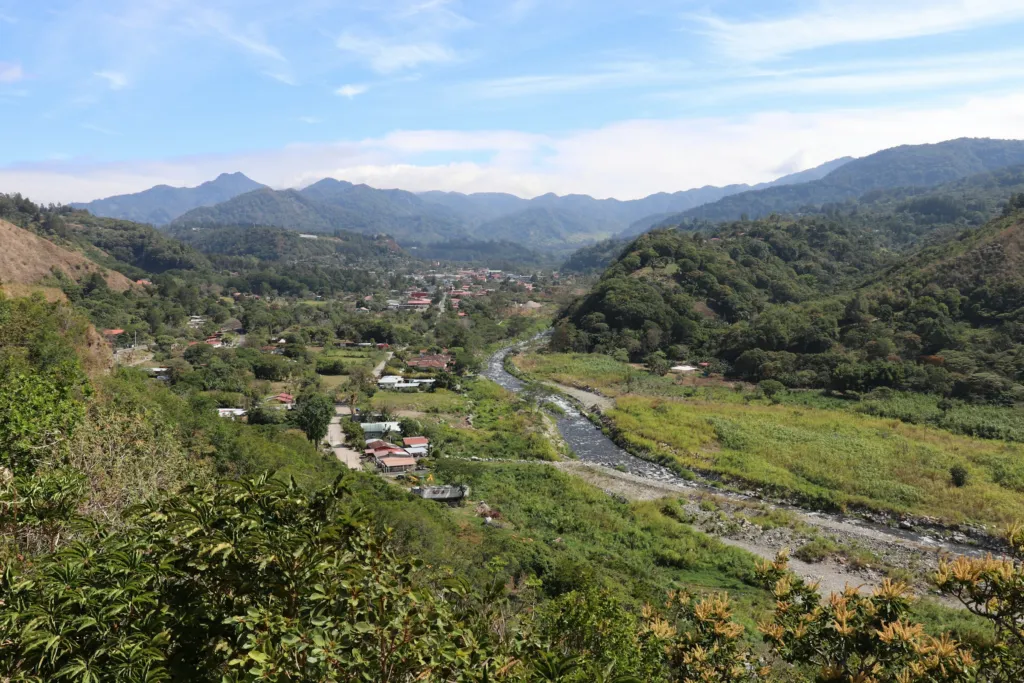
Boquete, in Panama’s western highlands, attracts retirees looking for a cooler climate, scenic mountain landscapes, and an established international community.
Panama uses the U.S. dollar alongside the balboa, which helps Americans avoid everyday exchange-rate uncertainty.
The country’s Pensionado program is another attraction for qualifying retirees and may provide discounts on certain services.
Why consider Boquete? Mountain climate, international retirement community, dollar-based economy, and pensioner benefits.
Important consideration: Transportation, medical access, and residency requirements can affect overall affordability.
How Far Can Your Social Security Benefits Go Abroad?
With the 2027 Social Security COLA increasing the average monthly retired worker benefit to approximately $2,170, retirees may have more flexibility in certain lower-cost destinations.
For example, consider a retiree with $2,170 in monthly benefits and estimated expenses of $1,400.
That would leave approximately $770 before any costs excluded from the budget, such as insurance, taxes, long-distance travel, or emergency savings.
Of course, that scenario is only illustrative. Actual expenses can be significantly higher depending on housing choices, healthcare requirements, and lifestyle.
A larger monthly benefit may also provide more flexibility, while someone receiving less than the national average should be particularly cautious about relocating without additional financial reserves.
The key is determining how much everyday purchasing power your income provides in a particular destination.
Find Where the U.S. Dollar Goes Further With VANAFLY’s Travel Money Index
When comparing affordable places to retire, monthly expenses are only part of the equation.
Currency exchange rates and local purchasing power can significantly influence what retirees can afford.
For example, a favorable exchange rate might make local restaurants, transportation, and services less expensive for Americans. However, housing costs, imported products, and inflation can offset those advantages.
VANAFLY’s Travel Money Index provides a useful starting point for exploring destinations where U.S. travel dollars may offer greater purchasing power.
Whether you’re considering Thailand, Colombia, Mexico, or another international destination, understanding currency value can help identify places worth researching further.
Use the Travel Money Index alongside detailed local cost-of-living estimates, housing research, healthcare comparisons, and residency requirements.
Explore VANAFLY’s Travel Money Index and discover destinations where your dollars may go further.
Can You Collect Social Security While Living Abroad?
Yes, many eligible U.S. citizens can continue receiving Social Security retirement benefits while residing outside the United States.
The Social Security Administration has specific rules governing international payments, and some countries are subject to restrictions.
Retirees should also understand the difference between Social Security retirement benefits and Supplemental Security Income.
Although both programs are included in the Social Security COLA 2027 announcement, they have different rules for living abroad.
Social Security retirement benefits: Eligible U.S. citizens can generally continue receiving payments in many foreign countries.
Social Security Disability Insurance: Some beneficiaries may continue receiving payments abroad, subject to eligibility and country-specific rules.
Supplemental Security Income: SSI payments generally cannot continue during long-term residence abroad. Extended absences from the United States can cause ineligibility.
Healthcare also requires planning. Original Medicare generally does not cover routine medical treatment overseas, except in limited circumstances.
Before moving, retirees should confirm their benefit-payment eligibility, international healthcare coverage, visa requirements, and any applicable taxes.
Should You Retire Abroad After the 2027 Social Security COLA Increase?
For some Americans, retiring abroad can provide meaningful savings. For others, the challenges of healthcare, family separation, language, residency restrictions, and unexpected expenses may outweigh the advantages.
Before relocating, consider making an extended exploratory visit.
Spend time in an ordinary residential neighborhood rather than staying exclusively in tourist areas. Visit grocery stores, inspect rental properties, explore transportation, and research medical facilities.
That experience can help determine whether a destination fits both your budget and your lifestyle.
VANAFLY can help you begin that journey by comparing flights and hotels, exploring destinations, and researching the purchasing power of your travel budget.
A retirement destination isn’t truly affordable unless you can live there comfortably, legally, and sustainably.
Frequently Asked Questions About Social Security COLA 2027
What is the Social Security COLA for 2027?
The Social Security Administration announced a 3.6% cost-of-living adjustment for 2027. The increase takes effect with Social Security benefits payable in January 2027.
How much will Social Security payments increase in 2027?
The average retired worker will receive approximately $75 more per month, bringing the projected average payment to around $2,170. Individual increases depend on current benefit amounts and applicable deductions.
When was the 2027 Social Security COLA announcement made?
The official announcement was made on October 14, 2026, by the Social Security Administration.
How does Social Security inflation impact seniors?
Inflation can increase essential expenses such as housing, food, healthcare, and transportation. Annual COLA adjustments are intended to protect purchasing power, but each retiree’s actual expenses and financial circumstances differ.
Where are the most affordable places to retire on Social Security?
Potential options include Da Nang, Chiang Mai, Cuenca, Tirana, Antalya, Tbilisi, Ajijic, Medellín, Penang, and Boquete. Actual affordability depends on personal expenses and the ability to obtain legal residency.
Can I live abroad on $1,500 in Social Security benefits?
It may be possible in some lower-cost destinations, particularly with modest housing and spending habits. However, health insurance, residency requirements, emergencies, and travel expenses can make a $1,500 monthly budget difficult to sustain.
Can I collect Social Security if I retire in another country?
Many eligible U.S. citizens can receive retirement benefits abroad. Rules vary depending on the destination and type of benefit. SSI generally cannot continue during long-term residence outside the United States.
How can I check my 2027 Social Security payment amount?
You can view your personalized COLA notice through your my Social Security account when it becomes available or wait for the official mailed notice.
Final Thoughts: Your Retirement Income Could Go Further in 2027
The 2027 Social Security COLA increase of 3.6% provides additional monthly income for millions of Americans.
While the adjustment is welcome, where retirees choose to live can have a much greater impact on their everyday expenses.
Whether you’re interested in the beaches of Vietnam, the mountains of Ecuador, or the Mediterranean lifestyle of Turkey, exploring international retirement destinations may reveal opportunities to make a fixed income stretch further.
Start by researching everyday costs, healthcare, and visa eligibility. Then use VANAFLY’s Travel Money Index to explore where your U.S. dollars may offer greater purchasing power.
Your next chapter could begin somewhere you never expected.
Explore destinations, compare flights, find hotels, and discover more affordable travel opportunities with VANAFLY.