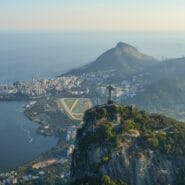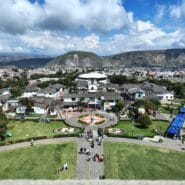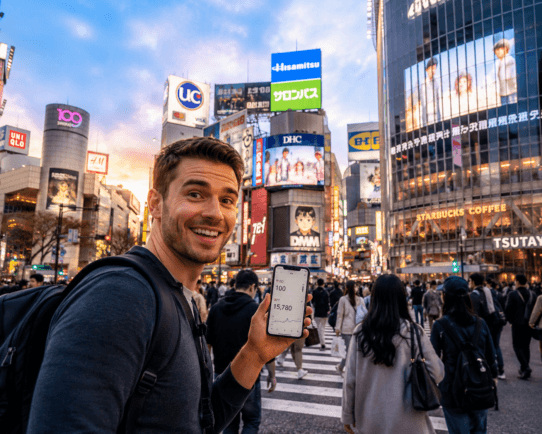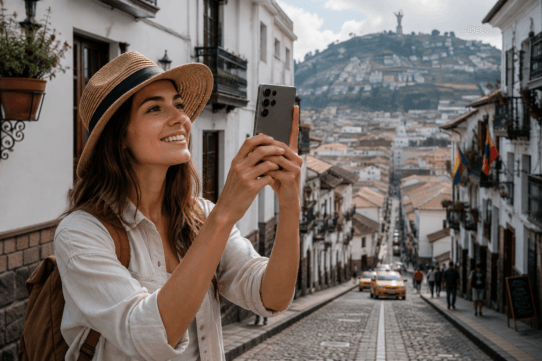


Discover affordable cities with fast internet, thriving coworking communities, incredible lifestyles, and opportunities to experience cultures that have not yet been overwhelmed by mass tourism.
Introduction
The digital nomad lifestyle has changed dramatically over the past few years. Before the pandemic, a handful of destinations dominated every list. Places like Bali, Chiang Mai, Lisbon, and Medellín became household names among remote workers. While they remain excellent places to live and work, their growing popularity has also brought higher rents, crowded coworking spaces, increased competition for housing, and in some cases stricter visa policies.
Today, experienced remote workers are looking beyond the usual hotspots. They want destinations that still offer affordability, reliable infrastructure, welcoming communities, and authentic cultural experiences. They are searching for places where they can enjoy a high quality of life without paying premium prices simply because a location has become famous on social media.
Fortunately, many cities around the world are investing in digital infrastructure, startup ecosystems, tourism, and remote work initiatives. These emerging destinations combine fast internet, modern amenities, rich cultural heritage, beautiful landscapes, and lower living costs than many established digital nomad hubs.
Whether you’re a freelance designer, software developer, entrepreneur, content creator, online teacher, or remote employee, these destinations offer exciting alternatives that deserve your attention.
In this guide, we’ll explore ten emerging digital nomad destinations that are rapidly gaining recognition in 2026, covering:
- Cost of living
- Internet reliability
- Coworking spaces
- Safety
- Visa options
- Lifestyle
- Climate
- Best neighborhoods
- Who each destination is best suited for
Let’s begin.
Table of Contents
What Makes a Great Digital Nomad Destination?
Before diving into the list, it’s worth understanding what separates a good travel destination from a great place to live and work remotely.
The best digital nomad cities usually excel in several key areas.
Reliable Internet
Fast and stable internet is non-negotiable. Whether you’re joining Zoom meetings, uploading videos, or managing cloud servers, poor connectivity can quickly become a dealbreaker.
Most destinations featured in this guide offer average download speeds exceeding 100 Mbps in urban areas, with coworking spaces often providing even faster connections.
Affordable Cost of Living
Lower living expenses allow remote workers to save money while maintaining a comfortable lifestyle.
Monthly budgets typically include:
- Accommodation
- Food
- Transportation
- Coworking membership
- Entertainment
- Healthcare
- Mobile data
Many emerging destinations offer an excellent quality of life for less than half the monthly cost of cities like London, New York, or San Francisco.
Strong Remote Work Community
Working remotely doesn’t mean working alone.
Coworking spaces, networking events, startup meetups, language exchanges, and entrepreneurial communities help digital nomads make friends, collaborate on projects, and avoid isolation.
Safety
Feeling comfortable walking around a city, using public transportation, and exploring neighborhoods contributes significantly to overall quality of life.
Every destination on this list has neighborhoods that are considered safe for travelers while following normal precautions.
Great Lifestyle
Remote work is ultimately about freedom.
Beautiful scenery, exciting food, outdoor activities, vibrant nightlife, cultural festivals, and opportunities for personal growth all contribute to making a destination memorable.
1. Da Nang, Vietnam
Vietnam has long attracted budget travelers, but Da Nang has quietly evolved into one of Southeast Asia’s most attractive cities for remote workers.
Unlike Ho Chi Minh City, which can feel hectic and densely populated, Da Nang strikes an ideal balance between modern infrastructure, beaches, mountain scenery, and affordability.
It also benefits from its central location between the historic cities of Hoi An and Huế, making weekend adventures easy.
Why Digital Nomads Love Da Nang
One of Da Nang’s greatest strengths is convenience.
You can finish a morning video conference, spend the afternoon surfing, enjoy world-class seafood for dinner, and still spend far less than you would in many Western cities.
The city has experienced significant investment in roads, internet infrastructure, cafés, and coworking spaces over the past decade.
Many apartment buildings now specifically cater to remote workers with furnished units, fiber internet, gyms, and rooftop pools.
Cost of Living
Approximate monthly budget:
- Apartment: $400 to $800
- Coworking space: $70 to $140
- Local meals: $2 to $5
- Restaurant dinner: $8 to $20
- Scooter rental: $50 to $80 per month
Comfortable monthly lifestyle:
$1,000 to $1,500 USD
Internet
Vietnam consistently ranks among Southeast Asia’s strongest internet performers.
Fiber internet is common throughout Da Nang, and many cafés provide excellent WiFi suitable for remote work.
Best Neighborhoods
My An
Popular with digital nomads thanks to beach access, cafés, gyms, and coworking spaces.
Hai Chau
Closer to government offices, shopping centers, restaurants, and nightlife.
Son Tra Peninsula
Ideal for those who prefer quieter surroundings and spectacular ocean views.
Best For
- Software developers
- Entrepreneurs
- Beach lovers
- Solo travelers
- Budget-conscious nomads
2. Tbilisi, Georgia
Tbilisi has transformed into one of Europe’s most exciting remote work destinations.
Although Georgia has welcomed digital nomads for several years, it remains significantly more affordable than Lisbon, Barcelona, or Prague while offering an equally vibrant café culture and entrepreneurial community.
The city’s blend of ancient architecture, Soviet history, contemporary art, and modern coworking spaces creates an atmosphere unlike anywhere else.
Lifestyle
Life in Tbilisi moves at a comfortable pace.
Historic neighborhoods feature narrow cobblestone streets, colorful balconies, hidden wine bars, and centuries-old churches, while newer districts offer sleek apartment buildings, shopping centers, and startup offices.
Georgia’s reputation as one of the oldest wine-producing regions in the world also means weekends often revolve around vineyard visits and traditional feasts known as supras.
Cost of Living
Typical monthly expenses include:
- Apartment: $500 to $900
- Coworking membership: $90 to $180
- Meals: $5 to $15
- Public transportation: Under $20 per month
Estimated monthly budget:
$1,200 to $1,800 USD
Internet
Georgia offers surprisingly excellent internet speeds, with many apartments connected to fiber networks.
Video conferencing and cloud-based work are rarely an issue.
Best Neighborhoods
Vera
Popular among entrepreneurs and creatives.
Vake
Upscale residential district with parks and cafés.
Old Tbilisi
Ideal for history lovers who enjoy being surrounded by architecture and nightlife.
Best For
- Freelancers
- Startup founders
- Writers
- Creative professionals
- Wine enthusiasts
3. Kuching, Malaysia
Malaysia is often overshadowed by Thailand and Bali, but Kuching is quietly becoming one of Southeast Asia’s hidden gems for digital nomads.
Located on the island of Borneo, Kuching combines modern conveniences with extraordinary access to rainforests, wildlife, and indigenous culture.
Unlike many tourist-heavy destinations, the city retains a relaxed local atmosphere while offering dependable infrastructure, English-speaking residents, and excellent healthcare.
For remote workers seeking a slower pace of life without sacrificing productivity, Kuching is an appealing choice.
Lifestyle
Life in Kuching revolves around its scenic waterfront, bustling food markets, and multicultural heritage.
Chinese, Malay, and Indigenous influences shape everything from architecture to cuisine. Evenings are often spent along the Sarawak River, where cafés, street performers, and open-air restaurants create a welcoming social atmosphere.
Weekends can be remarkably different from weekdays. One day you might be working from a riverside café with reliable WiFi, and the next you could be hiking in a national park, spotting orangutans at a wildlife center, or exploring limestone caves.
This balance between urban convenience and natural beauty is one of Kuching’s biggest advantages.
Cost of Living
A comfortable monthly budget typically includes:
- Furnished apartment: $450 to $850
- Coworking membership: $60 to $130
- Local meals: $2 to $6
- Restaurant dinner: $8 to $18
- Ride-sharing and public transport: $40 to $80
Estimated monthly budget:
$1,100 to $1,600 USD
Internet
Malaysia has some of the strongest internet infrastructure in Southeast Asia.
Fiber connections are widely available in Kuching, and many cafés cater to students, entrepreneurs, and remote professionals with dependable WiFi and comfortable workspaces.
Best Neighborhoods
Pending
Modern residential area with convenient shopping and easy transportation.
Jalan Song
Known for restaurants, cafés, and newer apartment developments.
City Centre
Perfect for nomads who want to walk to coworking spaces, cafés, and the waterfront.
Best For
- Nature lovers
- Writers
- Remote employees
- Photographers
- Travelers seeking a quieter alternative to Bali
4. Madeira, Portugal
When most people think of Portugal, Lisbon and Porto usually come to mind. Over the past several years, however, Madeira has become one of Europe’s fastest-growing destinations for remote professionals.
Located roughly 600 miles southwest of mainland Portugal in the Atlantic Ocean, this volcanic archipelago offers a unique combination of mild weather, dramatic landscapes, modern infrastructure, and a growing international community.
Madeira gained global attention after launching one of the world’s first Digital Nomad Village initiatives in the town of Ponta do Sol. Since then, thousands of entrepreneurs, freelancers, and remote employees have discovered that the island provides many of the benefits of mainland Europe without the congestion and high housing costs found in larger cities.
Unlike many islands that feel isolated, Madeira is surprisingly well connected through regular flights to major European cities.
Lifestyle
Madeira is ideal for people who enjoy outdoor living.
One day might begin with a client meeting from a seaside café. The afternoon could include hiking along centuries-old irrigation channels known as levadas or watching dolphins off the coast. Evenings often end with fresh seafood and spectacular sunsets over the Atlantic.
The island maintains a relaxed pace of life while still offering excellent healthcare, reliable public transportation, and modern supermarkets.
Cost of Living
Average monthly expenses include:
- One-bedroom apartment: $900 to $1,400
- Coworking membership: $120 to $220
- Local restaurant meal: $10 to $18
- Groceries: $250 to $400
- Transportation: $40 to $90
Estimated monthly budget:
$1,900 to $2,600 USD
While Madeira is more expensive than Southeast Asia, it remains significantly more affordable than many Western European capitals.
Internet
Portugal consistently ranks among Europe’s leaders in broadband quality.
Fiber internet is widely available across Madeira, and many accommodations specifically advertise remote-work-friendly internet speeds.
Best Neighborhoods
Funchal
The island’s capital offers the widest selection of coworking spaces, restaurants, nightlife, and apartments.
Ponta do Sol
Home to the Digital Nomad Village and one of the most popular communities for long-term remote workers.
Caniço
A quieter residential area with ocean views and convenient access to Funchal.
Best For
- Entrepreneurs
- Content creators
- Outdoor enthusiasts
- Couples
- Professionals working European time zones
5. Sarandë, Albania
Only a decade ago, Albania was rarely mentioned in conversations about remote work.
Today, the country is rapidly becoming one of Europe’s best-value destinations thanks to low living costs, beautiful Mediterranean beaches, improving infrastructure, and a welcoming attitude toward international visitors.
Sarandë sits along the Albanian Riviera overlooking the Ionian Sea, just across the water from the Greek island of Corfu.
Its turquoise coastline, affordable apartments, and relaxed atmosphere make it especially appealing to digital nomads looking for a European beach lifestyle without paying Greek or Italian prices.
Lifestyle
Life in Sarandë revolves around the sea.
Morning swims before work are common during the warmer months. Cafés line the waterfront promenade, and evenings are filled with outdoor dining, live music, and sunset walks.
The nearby UNESCO World Heritage Site of Butrint offers fascinating archaeological ruins dating back thousands of years.
Weekend trips to mountain villages, hidden beaches, and nearby Greece are all easily accessible.
Cost of Living
Typical monthly costs include:
- Apartment: $500 to $900
- Coworking: Limited but expanding
- Coffee: $1.50 to $3
- Restaurant dinner: $8 to $18
- Transportation: Minimal if living centrally
Estimated monthly budget:
$1,100 to $1,700 USD
Internet
Internet quality has improved dramatically in recent years.
Fiber internet is increasingly common in apartment buildings, while mobile data plans are inexpensive and fast enough for backup connectivity.
Best Neighborhoods
City Center
Walkable access to cafés, beaches, and restaurants.
Kodrra
A quieter hillside neighborhood offering panoramic sea views.
Best For
- Beach lovers
- Couples
- European slow travelers
- Budget-conscious freelancers
6. Cuenca, Ecuador
For years, Ecuador’s capital Quito attracted expatriates and travelers, but Cuenca has quietly become one of South America’s most attractive cities for remote workers.
Known for its colonial architecture, mild climate, walkable streets, and affordable healthcare, Cuenca offers an exceptional quality of life.
The city combines old-world charm with modern conveniences, making it particularly appealing for long-term stays.
Unlike larger metropolitan areas, Cuenca maintains a relaxed pace that many remote workers find conducive to productivity.
Lifestyle
The city’s UNESCO-listed historic center is filled with beautiful plazas, churches, cafés, museums, and artisan markets.
The surrounding Andes Mountains provide opportunities for hiking, cycling, and weekend exploration.
Many digital nomads appreciate Cuenca’s café culture, where it is easy to spend hours working while enjoying locally grown Ecuadorian coffee.
Cost of Living
Monthly expenses generally include:
- Apartment: $500 to $900
- Coworking: $70 to $150
- Meals: $3 to $10
- Groceries: $200 to $300
- Transportation: Under $40
Estimated monthly budget:
$1,200 to $1,800 USD
Internet
Internet quality has improved substantially over recent years, with fiber service becoming increasingly available throughout the city.
Best Neighborhoods
El Centro
Historic district close to restaurants and cultural attractions.
Ordoñez Lasso
Popular with expatriates thanks to newer apartments and quieter streets.
Best For
- Writers
- Retirees working remotely
- Online educators
- Long-term digital nomads
7. Bansko, Bulgaria
What began as a ski resort has evolved into one of Europe’s most respected digital nomad communities.
Bansko has developed a reputation for combining mountain living with affordable housing, dependable internet, and one of Europe’s strongest coworking cultures.
Each year, conferences, networking events, startup gatherings, and workshops attract thousands of entrepreneurs from around the world.
Despite this growth, the town remains far less expensive than most Western European destinations.
Lifestyle
Winter revolves around skiing and snowboarding.
Summer offers hiking, mountain biking, trail running, and outdoor cafés.
The slower pace of life allows many entrepreneurs to focus deeply on their businesses while still enjoying an active lifestyle.
Cost of Living
Monthly estimates:
- Apartment: $450 to $800
- Coworking: $80 to $150
- Restaurant meals: $7 to $15
- Transportation: Minimal
Estimated monthly budget:
$1,000 to $1,500 USD
Internet
Bulgaria consistently ranks among the world’s fastest internet providers.
Reliable fiber internet is one of Bansko’s strongest selling points.
Best Neighborhoods
Most remote workers stay within walking distance of the historic center and the gondola area.
Best For
- Entrepreneurs
- Startup founders
- Software developers
- Outdoor enthusiasts
8. Penang, Malaysia
Malaysia’s island state of Penang combines modern infrastructure with extraordinary cultural diversity.
George Town, the capital, is famous for its UNESCO-listed streets, colorful murals, colonial architecture, and internationally recognized food scene.
Although Kuala Lumpur receives most of Malaysia’s attention, Penang offers a more relaxed lifestyle while maintaining excellent internet, healthcare, and transportation.
Lifestyle
Few cities in Asia combine work and leisure as effortlessly as Penang.
You can spend your morning working from a specialty coffee shop, enjoy lunch at a Michelin-recognized street food stall, visit museums during the afternoon, and finish the evening watching the sunset from a seaside promenade.
Penang’s multicultural heritage creates one of Southeast Asia’s richest culinary experiences.
Cost of Living
Typical monthly costs:
- Apartment: $500 to $900
- Coworking: $70 to $140
- Meals: $2 to $8
- Transportation: $40 to $80
Estimated monthly budget:
$1,200 to $1,800 USD
Internet
Excellent.
Fiber internet is common, and Malaysia’s mobile networks are among the most reliable in Southeast Asia.
Best Neighborhoods
George Town
The cultural heart of Penang with cafés, coworking spaces, and nightlife.
Tanjung Tokong
Modern residential district with newer apartments.
Best For
- Food lovers
- Creative professionals
- Designers
- Remote employees
9. Tirana, Albania
While many travelers head straight for Albania’s stunning Riviera, the country’s capital, Tirana, has quietly become one of Europe’s most promising cities for digital nomads.
Over the last decade, Tirana has undergone a remarkable transformation. Once relatively unknown to international travelers, it now boasts colorful architecture, a thriving café culture, modern shopping centers, expanding coworking spaces, and a growing community of entrepreneurs and freelancers.
One of Tirana’s greatest advantages is its affordability. Compared to cities like Rome, Barcelona, or Amsterdam, the cost of living remains significantly lower while still providing many of the conveniences remote workers expect.
The city also serves as an excellent base for exploring Albania. Within a few hours, you can reach beaches along the Adriatic and Ionian Seas, hike in the Albanian Alps, or visit historic UNESCO World Heritage towns such as Berat and Gjirokastër.
Lifestyle
Coffee culture is central to life in Tirana.
Locals often spend hours working, socializing, or meeting clients in cafés that feature comfortable seating and reliable WiFi. The city is remarkably walkable, particularly around Skanderbeg Square and the trendy Blloku district.
Blloku, once restricted to Albania’s communist elite, has transformed into one of the city’s liveliest neighborhoods. It is filled with boutique hotels, restaurants, cocktail bars, gyms, coworking spaces, and modern apartments.
Weekends can be spent exploring nearby mountains, relaxing on the coast, or discovering centuries of Albanian history.
Cost of Living
A comfortable monthly budget includes:
- Furnished apartment: $600 to $950
- Coworking membership: $80 to $160
- Restaurant meals: $5 to $15
- Coffee: $1.50 to $3
- Public transportation: Under $20
Estimated monthly budget:
$1,200 to $1,800 USD
Internet
Internet quality continues to improve, with fiber connections available throughout much of the city. Mobile data is inexpensive and provides a reliable backup for remote work.
Best Neighborhoods
Blloku
The most popular neighborhood for digital nomads thanks to its restaurants, nightlife, coworking spaces, and cafés.
Komuna e Parisit
Modern residential district with newer apartment buildings.
City Center
Ideal for people who want to walk almost everywhere.
Best For
- Entrepreneurs
- Freelancers
- European travelers
- Remote employees
- Budget-conscious professionals
10. Cebu City, Philippines
The Philippines has long attracted travelers with its tropical islands and friendly hospitality, yet many digital nomads still overlook Cebu City.
Unlike Manila, Cebu offers a more relaxed atmosphere while maintaining excellent infrastructure, shopping malls, healthcare, and transportation. It also serves as a gateway to some of the country’s most spectacular beaches, waterfalls, diving sites, and island-hopping adventures.
English is widely spoken, making everyday life easier for international remote workers.
Lifestyle
Cebu strikes an appealing balance between city life and outdoor adventure.
Modern cafés, coworking spaces, and shopping centers make it easy to stay productive during the workweek. On weekends, many residents head to nearby islands for snorkeling, scuba diving, whale shark tours, or white-sand beaches.
The local hospitality is another major advantage. Many digital nomads comment on how easy it is to meet people and build friendships.
Cost of Living
Typical monthly expenses include:
- Apartment: $500 to $900
- Coworking membership: $70 to $150
- Meals: $3 to $10
- Transportation: $30 to $70
Estimated monthly budget:
$1,200 to $1,700 USD
Internet
Internet reliability has improved considerably in recent years thanks to expanded fiber infrastructure and competition among internet providers.
Many coworking spaces also maintain backup internet connections to minimize downtime.
Best Neighborhoods
IT Park
The city’s technology hub and one of the most popular areas for remote workers.
Cebu Business Park
Modern district with restaurants, apartments, and shopping.
Lahug
A convenient neighborhood close to cafés and coworking spaces.
Best For
- First-time digital nomads
- Content creators
- Online educators
- Remote employees
- Beach lovers
How to Choose the Right Digital Nomad Destination
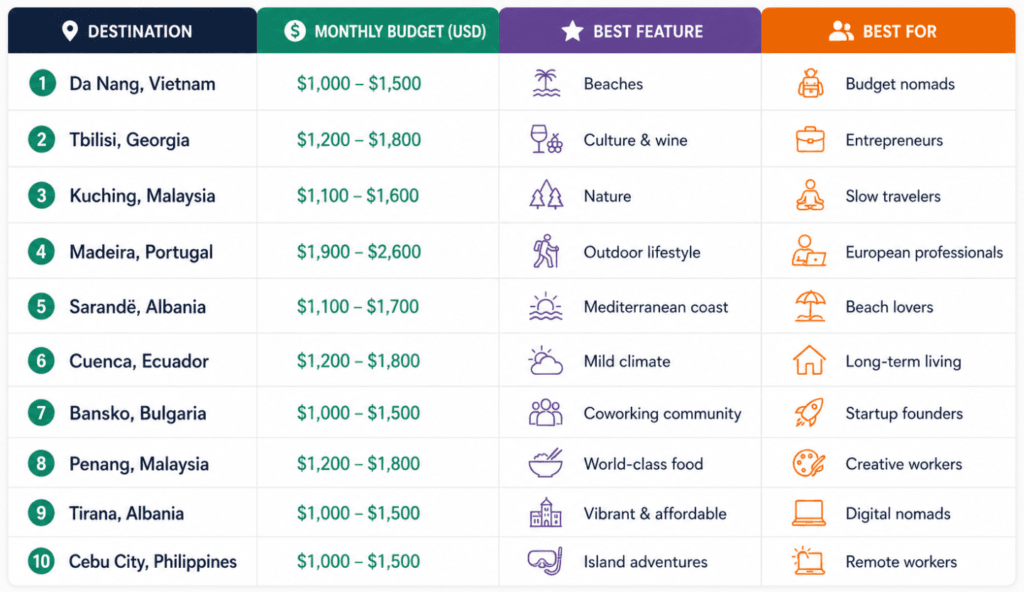
There is no universal “best” destination. The ideal location depends on your profession, lifestyle, budget, and personal priorities.
Here are a few factors to consider before booking your next stay.
If You Need Fast Internet
Choose destinations with mature fiber infrastructure such as:
- Bansko
- Madeira
- Penang
- Da Nang
- Tbilisi
If You’re on a Tight Budget
These destinations provide excellent value:
- Da Nang
- Bansko
- Kuching
- Sarandë
If You Love Nature
Consider:
- Madeira
- Kuching
- Cebu
- Da Nang
If You Prefer European Living
Excellent choices include:
- Tirana
- Sarandë
- Bansko
- Madeira
- Tbilisi
If Food Is Important
Food lovers should strongly consider:
- Penang
- Da Nang
- Tbilisi
- Cebu
Practical Tips Before You Move
Check Visa Requirements
Visa policies change regularly, so research the latest entry requirements before making long-term plans.
Some countries now offer digital nomad visas, while others allow remote workers to stay through tourist visas or temporary residence programs.
Always confirm whether remote work is permitted under your visa type.
Purchase Travel Insurance
Medical emergencies, delayed flights, lost luggage, and unexpected illnesses can happen anywhere.
A comprehensive travel insurance policy designed for long-term travelers can save thousands of dollars and provide peace of mind.
Have a Backup Internet Plan
Even in destinations with excellent infrastructure, internet outages occasionally occur.
Many experienced digital nomads carry:
- Local SIM cards
- Portable WiFi devices
- Backup coworking memberships
Having multiple connectivity options is especially important if you attend frequent video meetings or work with clients across different time zones.
Understand Local Taxes
Living abroad does not necessarily eliminate your tax obligations at home.
Depending on your citizenship, residency, and the length of your stay, you may need to report worldwide income or qualify for tax exclusions and treaties.
Consult a qualified tax professional before relocating for an extended period.
Respect Local Culture
One of the greatest rewards of the digital nomad lifestyle is experiencing different cultures.
Learning a few phrases in the local language, supporting locally owned businesses, and respecting community customs helps create positive relationships between visitors and residents.
Responsible travel benefits everyone.
Frequently Asked Questions
What is the cheapest destination for digital nomads?
Among the destinations on this list, Da Nang and Bansko generally offer the lowest monthly living costs while still providing reliable internet and strong infrastructure.
Which destination has the fastest internet?
Bulgaria, Portugal, Malaysia, Georgia, and Vietnam consistently rank among countries with excellent broadband infrastructure, making Bansko, Madeira, Penang, Tbilisi, and Da Nang particularly attractive.
Which destination is best for beginners?
Cebu, Penang, Da Nang, and Tirana offer a good balance of affordability, modern amenities, and welcoming communities, making them excellent choices for first-time digital nomads.
Is it better to stay in one place or move frequently?
Many experienced digital nomads find that staying at least one to three months in each destination allows them to build routines, establish friendships, reduce travel fatigue, and improve productivity.
Do I need a coworking space?
Not necessarily.
Many remote workers alternate between cafés, apartments, libraries, and coworking spaces depending on the type of work they need to complete. Coworking spaces become especially valuable for networking, meetings, and maintaining a professional routine.
Final Thoughts
The digital nomad movement continues to evolve. While iconic destinations like Bali, Lisbon, and Chiang Mai remain popular, a new generation of cities is attracting remote professionals who value affordability, authenticity, and a healthier work-life balance.
Whether you prefer the beaches of Da Nang, the mountains of Bansko, the cafés of Tbilisi, the culinary scene of Penang, or the colonial charm of Cuenca, each destination on this list offers something unique.
The best place to work remotely is not simply the one with the fastest internet or the lowest rent. It is the destination that complements your career goals, personal interests, and preferred pace of life.
As more countries invest in digital infrastructure and embrace location-independent professionals, opportunities for remote workers will only continue to grow. The next great digital nomad hub may not be the one everyone is talking about today. It may be the place that is quietly building its community, improving its infrastructure, and waiting to be discovered.
If you’re planning your next remote work adventure, consider looking beyond the usual hotspots. You may find that an emerging destination offers exactly the balance of productivity, affordability, and adventure you’ve been searching for.